Sign Up
How to Make a Short Film with AI in 2026 (Step-by-Step)
Author:
Narek Ghazaryan
Date:
May 30, 2026
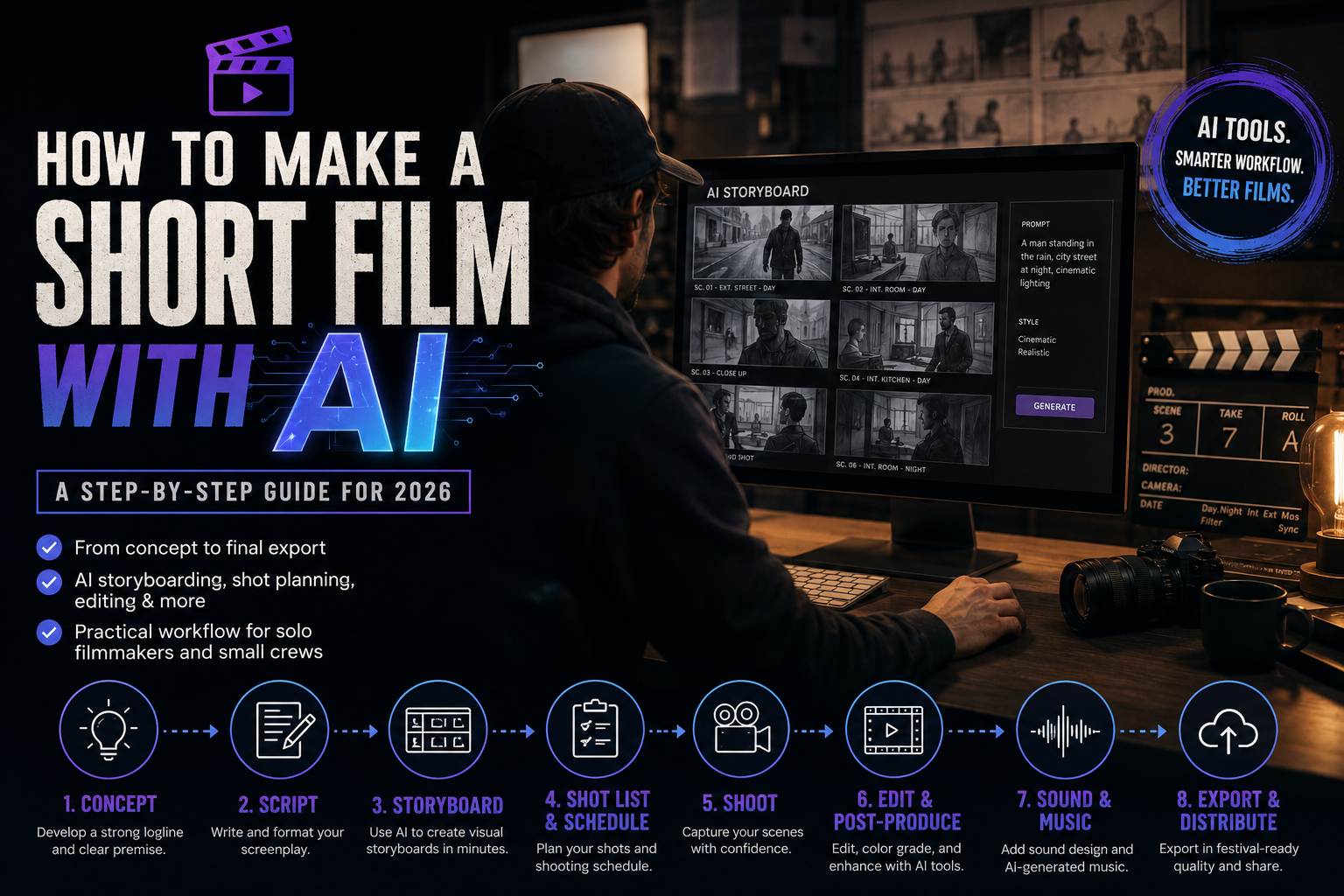
Figuring out how to make a short film has always been the easy part. Actually finishing one is where most filmmakers get stuck. Pre-production eats weeks. The storyboard creation process alone can take a professional artist five days on a ten-page script. For solo creators and small crews, that timeline kills more projects than bad writing ever did.
The AI in filmmaking market hit $3.84 billion in 2025 and is growing at over 25% annually. Studios using AI pre-production tools now run 25 to 35% leaner planning cycles. That same speed is available to independent filmmakers today. This guide covers every stage of short film production, from concept to final export, with AI plugged in at the steps where it saves the most time.
Develop Your Short Film Concept
A short film is not a compressed feature. It is one idea, one conflict, one character. The best shorts commit to a narrow premise and execute it fully. A five-minute film that nails one emotion will always beat a twenty-minute film that skims across several.
Start with a logline. One sentence. A character, a conflict, and stakes. If you need two sentences, the concept is too big. Trim it until the core stands alone.
Test the logline on someone who knows nothing about your project. If they can picture the story from that single line, you are ready to write. Damien Chazelle started Whiplash as a short before it became an Oscar-winning feature. That film worked because the premise was razor-sharp from the start.
Write and Format Your Script
One page of screenplay equals roughly one minute of screen time. A ten-minute short needs ten pages. Every scene must advance the story or reveal character. If it does neither, cut it.
Keep locations to two or three. Each new location adds setup time, lighting changes, and possible permit headaches. Fewer locations means more time shooting and less time moving gear.
Format your script properly. Scene headings, action lines, dialogue blocks. This is not just convention. It is the structure that AI tools read. A formatted screenplay feeds directly into storyboard generators and shot list builders without rework. Screenplay storyboard workflows show how a well-formatted script translates into visual panels. Write in present tense. Keep action lines under four lines. Describe only what the camera sees and the microphone hears.
Storyboard Your Film Using AI

This is where making a short film gets real. A storyboard forces every visual decision before production day. Framing, camera angle, character position, blocking. Problems that cost hours on set cost seconds on a storyboard panel.
The traditional route meant hiring an artist or sketching panels yourself. AI has collapsed that timeline. Drawstory takes a script or scene description and generates visual panels with consistent characters and accurate framing. A ten-page script that would take an artist three to five days produces panels in minutes.
These panels communicate specific shot composition and spatial relationships to your DP and crew. When everyone walks onto set with the same visual reference, you shoot faster. Fewer miscommunications. Fewer wasted takes. How filmmakers create storyboards with AI covers the full workflow.
Create Your Shot List and Schedule
Each storyboard panel becomes a row in your shot list. Scene number, shot number, framing, camera movement, lens, crew notes. A shot list template keeps everything organized so nothing gets missed on shoot day.
Group shots by location, not story order. Light a location once. Capture every shot there. Then move. This single decision saves more time on small budgets than anything else. Previsualization tools can help you plan camera setups and blocking before you arrive on location. A five-page short might have forty shots across two locations. Shooting out of sequence is standard on every professional set.
Pair the shot list with a one-page schedule. Account for daylight, cast availability, and setup complexity. Build in buffer time. If you think a scene takes an hour, block ninety minutes. Things will go wrong. The filmmakers who finish are the ones who planned for it.
Tips for Shooting Your Short Film
Here is the most reliable tip from working filmmakers: cover the scene, then move on. Shoot a wide master first. Then close-ups. Then inserts. This guarantees a complete edit even if you lose daylight or an actor leaves early. Many beginner projects fail in the edit because the director chased one perfect angle and forgot to get basic coverage.
Modern smartphones shoot 4K. The camera is no longer the bottleneck. Audio and lighting are. A decent external microphone and basic three-point lighting will improve your production value more than any camera body upgrade. Bad audio ruins a project faster than a shaky image.
Stick to the storyboard on set. The panels exist so the crew captures exactly what was planned. Improvising burns hours and creates coverage gaps that haunt you in the edit. Storyboard examples from real films and ads shows how professionals lock shots before production day.
Edit and Post-Produce Your Film
Import footage. Organize by scene and shot number, matching the storyboard. Label every clip before you start cutting.
Assemble a rough cut that follows the storyboard order. Do not make creative decisions yet. This first assembly is a diagnostic tool, not the final product. The storyboard to video pipeline works best when you match each clip to its original panel. It shows pacing problems, missing coverage, and continuity breaks while you still have time to fix them. Watch it once all the way through without stopping. You will feel where it drags.
AI tools now handle hours of repetitive post work. Color matching between shots, noise reduction, subtitle generation, background music. DaVinci Resolve, Premiere Pro, and CapCut all include AI features for these tasks. For a broader look at what is available, see this roundup of AI tools for filmmakers. Use them. Free up your editing time for the choices that shape the film: where to cut, what to remove, and where silence works harder than dialogue.
Cut hard. If a scene works without a line, remove the line. If the film works without a scene, remove the scene. Economy is a strength, not a limitation. The audience does not know what you removed. They only feel what remains.
Add Sound Design and Music
Audiences forgive imperfect visuals. They do not forgive bad audio. Clean dialogue recording on set is non-negotiable. No AI tool fully recovers a poorly recorded take.
In post, AI audio tools suppress background noise and separate dialogue from ambient sound. For music, tools like Suno and AIVA generate original scores matched to mood and tempo. No licensing costs. No sync rights headaches. This matters especially for beginner filmmakers who cannot afford to clear commercial tracks.
Layer three tracks: dialogue, ambient sound, and music. Ambient sound (room tone, traffic, wind) fills the space between lines and makes scenes feel real. Keep music under dialogue. Never let them compete.
Export and Distribute Your Short Film
Festival submissions usually require ProRes or H.264 at 1080p or 4K, 24fps. Social platforms compress on upload, so always export at maximum bitrate. Let the platform handle the downscale.
Submit through FilmFreeway or Shortfilmdepot. Read each festival's premiere requirements before you post anything online. Many festivals require a world or regional premiere. A public YouTube upload before your screening date can disqualify your entry. Plan your release strategy before you hit publish.
Once your festival run is done, upload to YouTube or Vimeo with proper metadata. Write a clear title. Pick a thumbnail that communicates tone. Add your logline in the description. These small details determine whether strangers click or scroll past.
How AI Fits into the Short Film Workflow
AI does not replace the filmmaker. It replaces the bottlenecks. Storyboarding, shot planning, color grading, audio cleanup, and music composition. These are the stages where a solo filmmaker or small crew loses days. AI compresses each into minutes. The result is not a lesser film. It is more time spent on the work that actually matters.
The creative decisions stay human. What story to tell. How to frame an emotion. When to cut. For pre-production, Drawstory handles the most time-intensive step. Upload a script, get production-ready storyboard panels with consistent characters and accurate composition. That alone can cut a week out of your production timeline and let you walk onto set with a clear visual plan.
Frequently Asked Questions
How long should a short film be?
Most film festivals define a short film as anything under 40 minutes. In practice, the sweet spot is 5 to 15 minutes. Shorts under five minutes work well for social platforms and quick festival programs. Shorts over fifteen minutes need a strong reason for the extra runtime. Keep it as long as the story needs and not a second longer.
Can I make a short film with no budget?
Yes. A smartphone, a free editing tool like DaVinci Resolve, and natural light are enough to get started. The real cost is time, not money. AI tools reduce the time cost significantly. Free storyboard generators handle pre-production. Free AI audio tools clean up dialogue in post. The most important investment is a decent microphone, which starts around $50.
How does AI help in short film production?
AI speeds up the stages that traditionally slow down independent filmmakers. Storyboarding, shot list generation, color grading, noise reduction, and music composition all have AI-powered tools now. Drawstory generates storyboard panels from a script in minutes instead of days. AI editing tools in Premiere Pro and DaVinci Resolve handle color matching and audio cleanup. The filmmaker still makes every creative decision. AI just removes the busywork.
Frequently Asked Questions
Got Questions?
Find clear answers to common questions about Drawstory, our services, process, and how we bring your ideas to life.
How long should a short film be?


How does AI help in short film production?
How accurate are AI storyboard generators - will they understand my specific vision?
How long does it take to create a short AI film?
Do film festivals care whether AI was in production?



