Sign Up
10 Storyboard Examples from Real Films, Ads & Animation Projects
Author:
Narek Ghazaryan
Date:
April 28, 2026
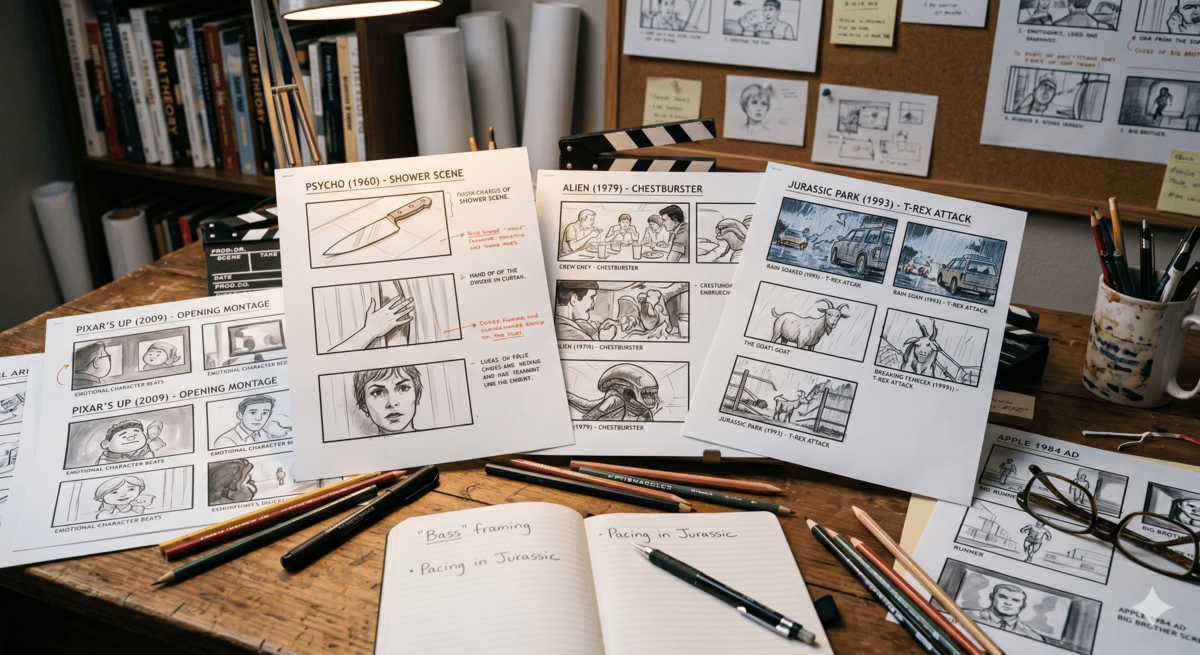
Storyboard examples from real productions teach what no template can. They show how directors plan camera angles, pacing, and emotion before a single frame gets shot.
This guide covers 10 real examples from iconic films, animated features, and ad campaigns. Each entry breaks down what the storyboard accomplished and why it worked.
What a Storyboard Does in Pre-Production
A storyboard is a visual plan for any production. Each shot becomes a drawn panel arranged in sequence. Together, the panels map camera placement, character blocking, and scene transitions. Directors use storyboards to communicate their vision to the full crew before shooting starts.
The more complex the project, the more essential the storyboard becomes. How filmmakers create storyboards with AI today follows these same planning principles at any production scale.
Film Storyboard Examples
A storyboard for film plans action that costs millions to shoot. Each panel represents a camera setup, a lighting rig, and a crew call. Getting it wrong on paper is cheap. Getting it wrong on set is not. These five productions shaped how Hollywood approaches visual planning.
1. Psycho (1960): The Shower Scene
Hitchcock hired graphic designer Saul Bass to storyboard the shower scene in Psycho. The boards planned roughly 70 camera setups for under one minute of screen time (source: Art of the Title). Each panel specified the exact framing for every cut. Close-ups of hands, water, and the drain built tension without showing graphic violence. Bass used tight cropping to control what the audience saw and what it imagined. This remains one of the most studied visual sequences in cinema history. The precision of the boards turned a confined bathroom into a masterclass in visual suspense.
2. Alien (1979): The Chestburster Scene
Ridley Scott storyboarded every frame of the chestburster reveal in Alien. The panels planned a slow build from calm to chaos. Wide shots of the crew eating together shift to medium shots as Kane convulses. Then rapid cuts follow as the creature appears. Scott specified lighting changes from warm tones to clinical white in the boards. That created deliberate contrast between safety and horror. This approach to shot composition defined how directors handle reveal sequences. The boards gave every department a shared reference for the scene's escalation.
3. Jurassic Park (1993): The T-Rex Attack
Spielberg's storyboards for the T-Rex paddock attack planned every beat of the rain-soaked sequence. Panels showed the water glass vibrating, the goat vanishing, and the first dinosaur reveal through broken fencing. The boards timed the pause between each scare. That deliberate gap between panels turned a visual effects scene into a suspense sequence. Previsualisation in modern filmmaking builds on the same frame-by-frame approach Spielberg used here. His boards proved that pacing on paper translates directly to pacing on screen.
4. Mad Max: Fury Road (2015): Full Film Storyboard
George Miller storyboarded the entirety of Fury Road before writing a traditional screenplay. The production created over 3,500 panels across the project (source: Wired). Artist Brendan McCarthy drew every shot. The boards served as the primary script for the film. Each chase, explosion, and character beat was planned visually before any dialogue was written. This process kept two hours of near-constant action coherent and readable. Few movie storyboard examples match this project's scale or ambition in visual pre-production.
5. Spartacus (1960): Battle Sequences
Saul Bass created storyboards for the battle scenes in Spartacus. His panels choreographed thousands of extras across wide landscapes. The boards specified overhead angles that showed army formations moving in unison. They also planned the camera's descent into close combat. Bass used graphic composition to make massive scenes readable on screen. His work on Spartacus remains a reference for planning complex action with large casts. AI filmmaking tools now help automate parts of this visual planning process for modern productions.
Animation Storyboards
Animation storyboards carry even more weight than live-action boards. Every frame is drawn from scratch. There is no improvisation on set. The storyboard is the blueprint the entire production follows. These three animation storyboard examples show how studios plan emotion and movement before production begins.
6. Up (2009): The Opening Montage
Pixar's opening montage tells a full love story in four minutes. Not a single line of dialogue. The storyboard team planned every emotion through visual pacing alone. Panels shifted from wide shots of the couple's home to intimate close-ups of their hands. The boards noted when the color palette should warm and when it should fade. That careful planning created a sequence audiences cite as one of animation's most emotional moments. Text to storyboard workflows apply this same visual-first approach to new projects today.
7. Frozen (2013): "Let It Go" Sequence
Disney's storyboard artists planned the sequence as one continuous transformation. Boards mapped Elsa's movement from a confined, careful walk to open, expansive gestures. Each panel matched a specific musical beat in the song. Camera angles widened as her confidence grew across the sequence. The storyboard specified the ice palace construction shot by shot. The visual rhythm in the boards drove the final animation's pacing and emotional arc.
8. The Lion King (1994): The Stampede
Disney storyboarded the wildebeest stampede across dozens of detailed panels. Overhead wide shots established the herd's enormous scale. Close-ups of Simba's face built tension frame by frame. Artists specified dust levels, herd direction, and the exact moment Mufasa enters the scene. The sequence combined hand-drawn animation with early CGI. That technical mix required precise storyboarding to keep both visual techniques seamlessly matched. It remains one of the most referenced storyboarding examples in animation history.
Commercial Storyboards
Advertising storyboards compress an entire story into seconds. A 30-second spot has zero room for wasted frames. These commercial storyboard examples show how agencies plan every beat to land a message fast. These two campaigns demonstrate the discipline short-form visual storytelling demands.
9. Apple "1984" Super Bowl Ad
Ridley Scott directed Apple's famous 1984 Super Bowl commercial. Storyboards planned every second of the 60-second spot in advance. Panels mapped the visual contrast between grey dystopian crowds and a lone runner in bright color. The boards specified the hammer throw, the screen explosion, and the closing text card. Every frame served a clear purpose. Ad boards at this level treat each second as a deliberate visual beat. The best AI storyboard generators bring this same precision to modern ad production at a fraction of the original cost.
10. Red Bull "Gives You Wings" Campaign
Red Bull's animated ad campaigns rely on storyboards to plan their signature hand-drawn style. The boards define character movement, comedic timing, and the product reveal in each spot. Every commercial follows a tight three-act structure. Setup, twist, then tagline. The storyboard ensures the joke lands in under 30 seconds. Short-form ad boards demand more precision per panel than feature films. Every single drawing must carry narrative weight in a compressed format. AI storyboard software helps creative teams produce these boards faster without losing creative control.
What Makes a Great Storyboard
The best examples of a storyboard share core traits across every format. Clear shot composition in every panel. Consistent visual language across the full sequence. Deliberate pacing that controls how the audience experiences time. Strong storyboards also communicate camera movement and transitions between shots. These principles hold across formats. Music video storyboards, video storyboard projects for social content, and advertising boards all follow the same core logic. The best AI storyboarding tools apply the same planning logic to modern production workflows. The medium evolves. The visual storytelling fundamentals do not.
Build Your Own Storyboards
These 10 productions span six decades of visual storytelling. The planning principles behind each one still hold today. What has changed is the speed of production. DrawStory turns scripts into storyboard panels with locked characters and consistent framing. A movie pitch starts with boards that look professional from frame one. Build your own visual sequences with the same storyboard tools used by modern production teams.
Frequently Asked Questions
Got Questions?
Find clear answers to common questions about Drawstory, our services, process, and how we bring your ideas to life.
Why should I study real storyboard examples instead of templates?


What are the best film storyboard examples to learn from?
Which animated movies have strong storyboard examples?
Do commercials use storyboards too?
How detailed should a storyboard be?



