Sign Up
How Comic Book Writers Use AI to Create Comic Panels
Author:
Narek Ghazaryan
Date:
August 14, 2026
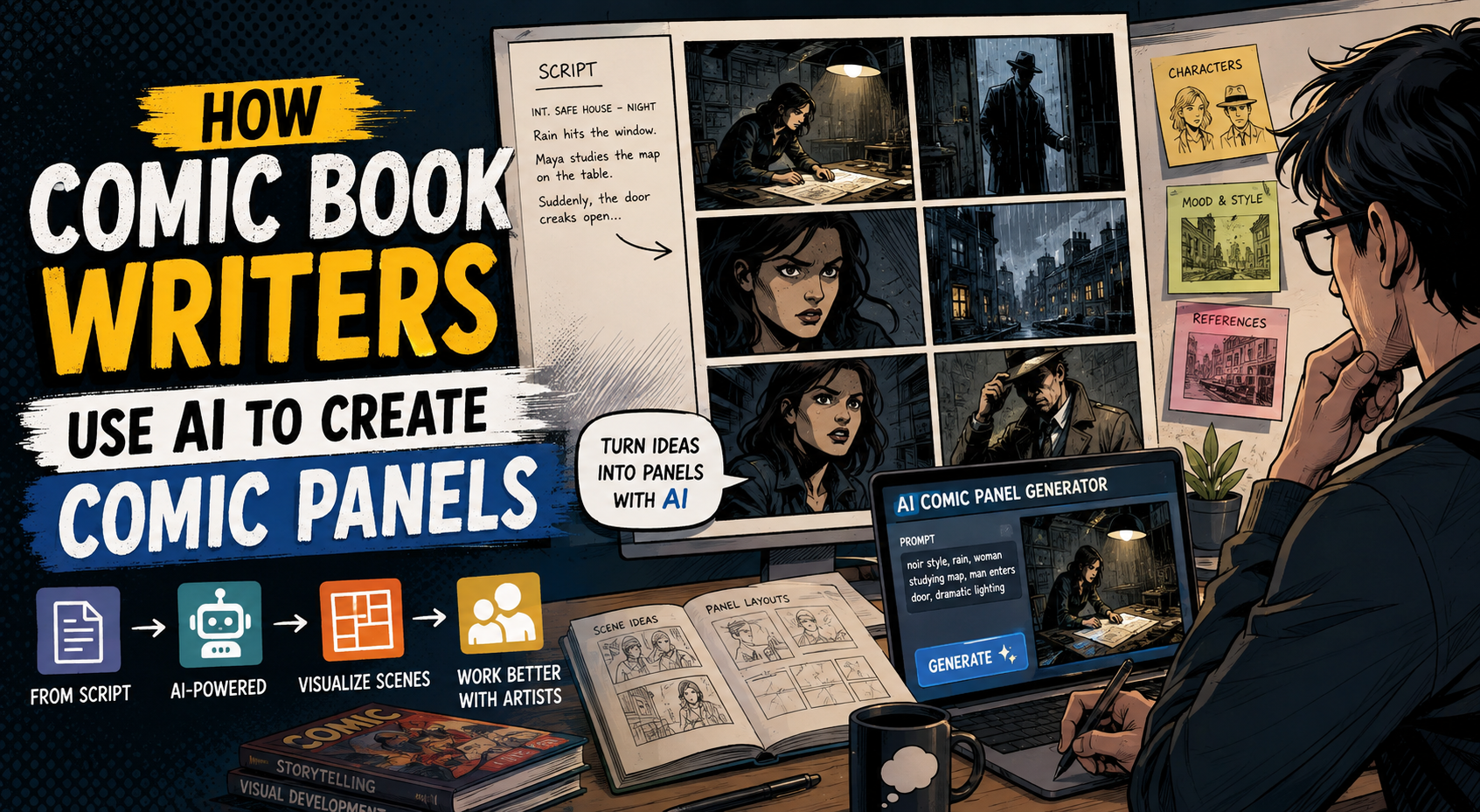
Creating a comic book involves much more than writing a script. Writers need to think about characters, environments, visual style, camera angles, composition, and how each panel connects to the next. For many comic book writers, the challenge is not knowing what the story should look like. It is finding an efficient way to turn those ideas into visual panels before an illustrator creates the final artwork. This is where AI can help.
AI tools can turn scripts and descriptions into comic panels, help writers explore different creative directions, and provide visual references for illustrators. Instead of treating AI as a replacement for the artist, writers can use it as a tool for brainstorming, exploration, and visual development.
How AI Fits Into Comic Book Creation
A typical AI-assisted comic book workflow can look like this:
Script → Characters and environments → Visual references → AI-generated panels → Illustrator → Final artwork
AI-generated panels do not have to become the final comic. They can help writers explore what a scene could look like and establish a clear direction before the final artwork is produced.
1. Turn a Script Into Comic Panels
The first use of AI is straightforward: turn a written script into visual panels. Instead of starting every scene with a blank page, a writer can upload a script and generate an initial visual interpretation.
The resulting panels can help answer questions such as:
- What should this scene look like?
- Where should the characters be positioned?
- What should the reader see first?
- Which moments need their own panels?
- Does the visual interpretation match the script?
An initial set of AI-generated comic panels can also reveal problems in a scene before an illustrator spends time producing the final artwork.
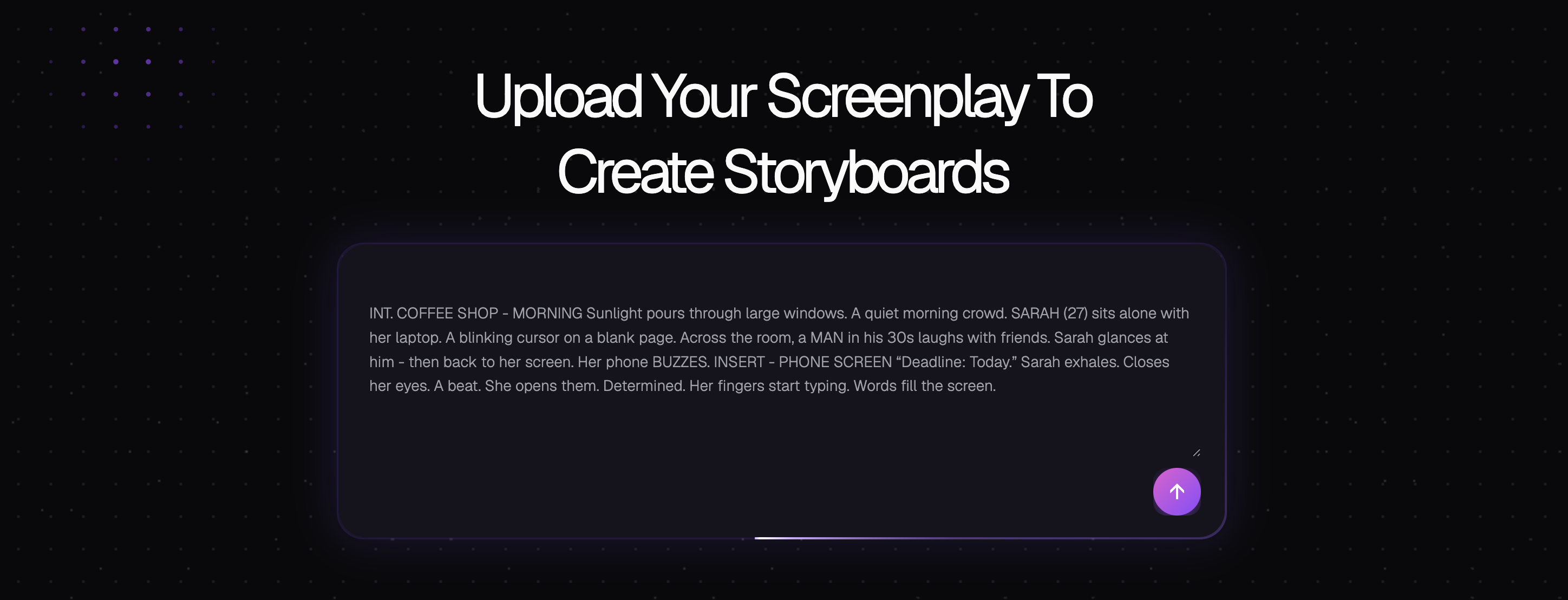
This makes an AI comic panel generator from script useful during the early stages of comic book production.
2. Use AI to Brainstorm Visual Ideas
One of the strongest uses of AI for comic book writers is visual exploration. A writer may have a concept in mind but not yet know exactly how it should look. For example, imagine creating a fictional world that combines the visual characteristics of 1950s Haiti with modern technology. Rather than immediately commissioning an illustrator to explore dozens of possibilities, AI can be used to generate different visual directions first.
You can experiment with:
- Different environments
- Architecture
- Props
- Character designs
- Color palettes
- Visual moods
- Composition
- Camera angles
The goal is not necessarily to find the final image.
The goal is to discover a direction worth developing.
3. Build a Visual World With References
Worldbuilding becomes particularly challenging when a story combines specific historical, cultural, and fictional elements. Generic prompts may not provide enough context. For example, describing a "bedroom in Haiti" does not necessarily communicate the specific historical period, architecture, cultural details, and fictional elements that belong in the story. References can provide additional context.
A writer can use photographs, sketches, previous artwork, or other visual references to communicate what they have in mind.
The process can be:
- Define the world in the script.
- Collect relevant visual references.
- Add those references to the creative workflow.
- Generate comic panel concepts.
- Refine the direction based on the results.
This allows the writer to build a more specific visual language instead of relying entirely on generic AI outputs.
4. Create Consistent Characters
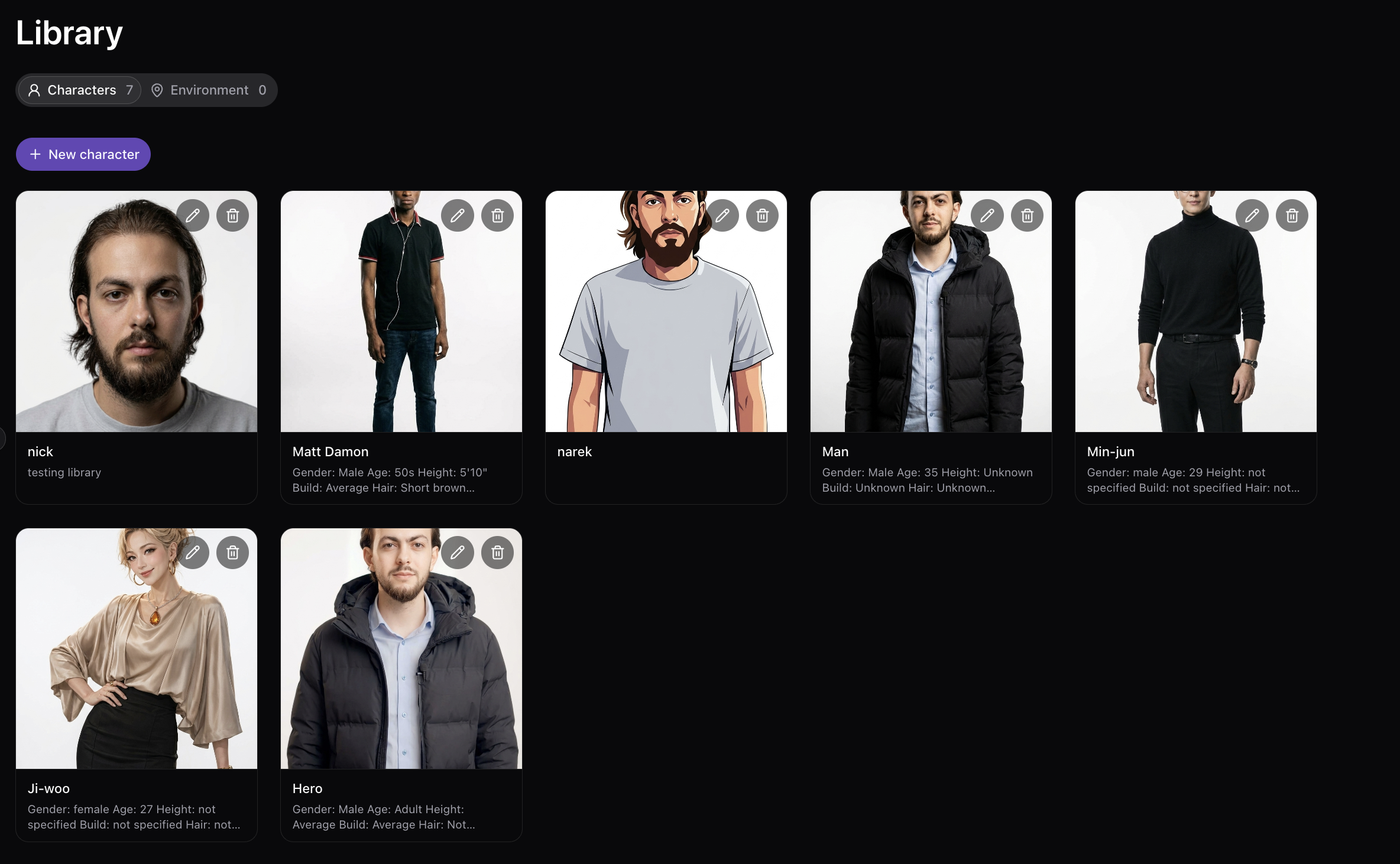
Character consistency is one of the biggest requirements when creating a comic book. A character may appear across dozens of panels, so their appearance needs to remain recognizable. AI tools can use character references to help establish that consistency.
Before generating scenes, writers can define important characteristics such as:
- Age
- Appearance
- Hairstyle
- Facial hair
- Clothing
- Body type
- Character details
- Personality or performance notes
The more specific the character information, the clearer the creative direction becomes. Reference images can also be used when a writer already has a character design. This is particularly useful when the writer wants to explore how the same character might appear in different environments and situations.
5. Develop Environments and Locations
The same approach can be applied to locations. A comic book may contain recurring envirement such as:
- A home
- A school
- An office
- A city street
- A fictional building
- A historical location
- A completely fictional world
Instead of generating each location independently, writers can establish references for important environments and use them as part of the panel creation process. This helps make the visual development of the story more deliberate. For stories based on specific cultures or historical periods, reference images can also help communicate details that are difficult to describe through text alone.
6. Experiment With Visual Styles
Comic book writers often have a particular visual direction in mind. AI can be useful for exploring that direction before the final illustration process begins. For example, a writer might combine references representing different visual characteristics to explore a new aesthetic.
The goal does not have to be reproducing another artist's work. Instead, references can help communicate things such as:
- Level of detail
- Color treatment
- Mood
- Composition
- Line quality
- Futuristic or vintage elements
- Overall visual atmosphere
AI-generated panels can then act as visual references for an illustrator who develops the final style independently.
7. Create Panels to Communicate With Illustrators
A written description can sometimes leave too much room for interpretation.
A visual panel gives an illustrator something concrete to work from.
Instead of explaining a scene entirely through text, a writer can show:
- Where the character is standing
- What the character is doing
- What the environment looks like
- What the camera sees
- Which objects are visible
- How the scene is composed
This can reduce the amount of back-and-forth required during visual development.
The illustrator still has creative freedom, but the starting point is much clearer.
8. Explore Different Camera Angles
Camera angles are another important part of creating comic panels. A single scene can communicate very different information depending on where the camera is positioned. For example, a character sitting at a desk might be shown from the front. A second angle from the side could reveal an object that was hidden in the first panel. For comic book writers, exploring these variations before illustration can help determine which composition communicates the story most effectively.
AI can be used to experiment with:
- Front views
- Side views
- Wide shots
- Close-ups
- Over-the-shoulder shots
- Different perspectives
- Changes in composition
The ability to explore these options can be particularly useful during pre-production.
9. Think About Backgrounds and Characters Separately
Another useful approach is to treat the environment and characters as separate creative elements. For example, a writer might first establish a room as a background and then decide where a character should be positioned within it. This provides more control over the composition.
The workflow could look like:
Environment → Character → Position → Action → Final panel
This approach is especially relevant to comic book and animation workflows where backgrounds and characters may be developed separately. It also makes it easier to experiment with different character positions without completely redesigning the environment.
10. Use AI to Explore Before Creating the Final Artwork
AI does not have to produce the finished comic book. A writer can use AI to explore an idea, generate references, test compositions, and visualize different possibilities. Then the final artwork can still be created by an illustrator. This creates a workflow where AI supports the creative process rather than replacing it:
Idea → AI exploration → Comic panels → Creative direction → Illustration → Final comic
For writers who already work with artists, this can make the collaboration more efficient because the artist receives a clearer visual direction.
How Much Time Can AI Save When Creating Comic Panels?
The exact amount of time will depend on the project, the complexity of the story, and how much visual exploration is required. But the biggest potential time saving comes from reducing the number of iterations before an illustrator starts producing final artwork. Instead of asking an illustrator to explore multiple possibilities from scratch, a writer can first use AI to investigate different directions.
For example:
Without AI:
Idea → Illustrator → First version → Feedback → Revision → More feedback → Final direction
With AI:
Idea → AI exploration → Select direction → Illustrator → Final artwork
The AI stage can therefore function as a visual brainstorming phase before the final illustration process.
AI Comic Panels vs. AI Comic Makers
There is an important distinction between using AI to create individual comic panels and using an AI comic maker to create a complete comic. If you are researching the best AI comic maker tools, you will find platforms designed to generate comic panels, characters, scenes, and other finished visual content. An AI panel creation tool can serve a different purpose. Instead of focusing entirely on the final artwork, it can be used for planning and visual development. The output can be rough, exploratory, and changeable.
For comic book writers, this distinction matters because a panel can be part of the creative process rather than necessarily the final published artwork. A writer can use AI to figure out what they want before committing to the final illustration.
How Drawstory Can Help Comic Book Writers
Drawstory lets writers start with a script and turn their ideas into visual panels. The workflow can include characters, environments, visual references, styles, and shot descriptions. This makes it possible to move from a written story toward visual panels without having to manually describe every scene to an illustrator from scratch.
For comic book writers, the biggest value is not simply generating images. It is having a faster way to see the story, explore possibilities, and communicate the visual direction before final illustration begins.
AI Can Become Part of the Comic Book Creation Process
AI can become a useful part of the comic book production process without replacing the creative work of writers and illustrators. It can help writers turn scripts into initial panels, explore characters and environments, test visual styles, experiment with camera angles, and create references for their creative teams.
The most useful way to think about AI-generated comic panels is as a visual brainstorming and pre-production tool. The writer still owns the story and creative direction. The illustrator can still interpret and develop the final artwork. AI simply makes it faster to move from an idea in your head to something you can actually see.
Frequently Asked Questions
Got Questions?
Find clear answers to common questions about Drawstory, our services, process, and how we bring your ideas to life.
Can AI turn my comic book script into panels?


Can I upload my own characters and references?
Will AI keep my characters consistent across comic panels?
Can I use AI-generated panels if an illustrator will create the final comic?
Can AI help me visualize a comic before I hire an illustrator?



