Sign Up
Best 10 Manga Storyboard Generators for 2026: Features, Pricing, Pros and Cons
Author:
Narek Ghazaryan
Date:
August 11, 2026

More writers are using manga storyboard generators to turn their stories into consistent manga panels. With new AI tools, writers can upload their entire story, upload sketched characters, enhance them with AI, and create a full, consistent manga storyboard.
Whether you want to visualize a manga before working with an illustrator or experiment with different styles and ideas, AI can make the early storyboarding process much faster.
What Is a manga storyboard generator?
A manga storyboard generator is AI software that helps writers turn their stories into manga storyboard panels without writing prompts.
These tools are designed specifically for writers who can't draw but have a story and a vision they want to turn into manga.
Instead of creating every panel from scratch, writers can use AI to visualize scenes, characters, compositions, and sequences based on their story.
Why Do Writers Use manga storyboard generators?
1. Create a First Draft of manga storyboard panels
Often, manga creators want to share a reference with professional illustrators. Instead of searching for the perfect shot or visual reference on Pinterest, they can use Manga Storyboard Generators to upload their entire story and create first-draft panels.
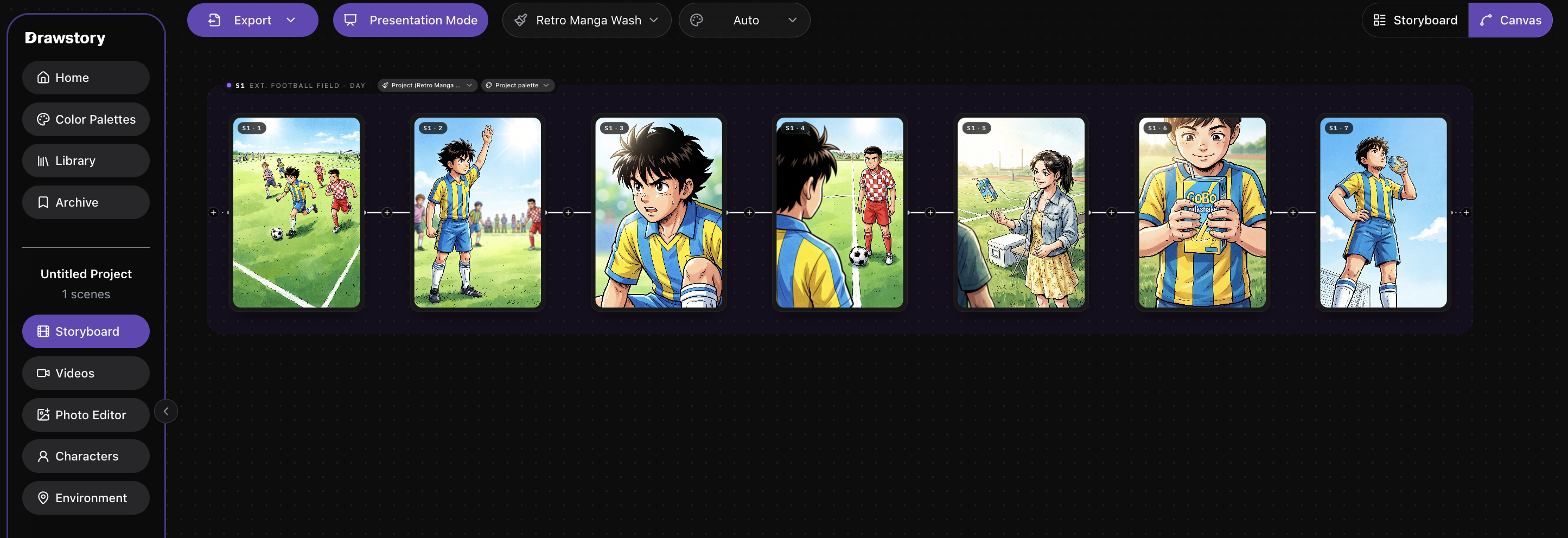
The result doesn't necessarily need to be the final artwork. It can simply give the illustrator a clearer idea of how the writer imagines the story.
2. They Have a Story to Turn Into Manga
With AI tools, writers can turn their stories into consistent and editable manga storyboards without needing to write prompts or draw every panel. They can simply input their story and use AI to turn it into a visual sequence. This is especially useful for writers looking for an ai manga storyboard generator from plot or a manga ai storyboard generator plot to panels workflow.
3. It's Better Than Midjourney, Higgsfield, or Nano Banana for Storyboarding
Manga Storyboard Generators such as Drawstory often offer functionality specifically designed to create manga storyboards without writing prompts. Instead of manually generating individual images, writers can upload their story and create a storyboard based on the narrative.
Tools such as Midjourney can still be useful for creating individual images, but a dedicated storyboard workflow can make it easier to think about the story as a sequence of panels.
4. Test Ideas and Experiment With Different Styles
Manga Storyboard Generators also allow writers to experiment with different visual styles and ideas before committing to the final artwork. You can visualize a scene, try different character designs, and explore how your story could look as manga before spending significant time and money on final illustrations.
Best Manga Storyboard Generators Compared
1. Drawstory
Best for: Writers who want to turn a story or plot into a consistent manga storyboard
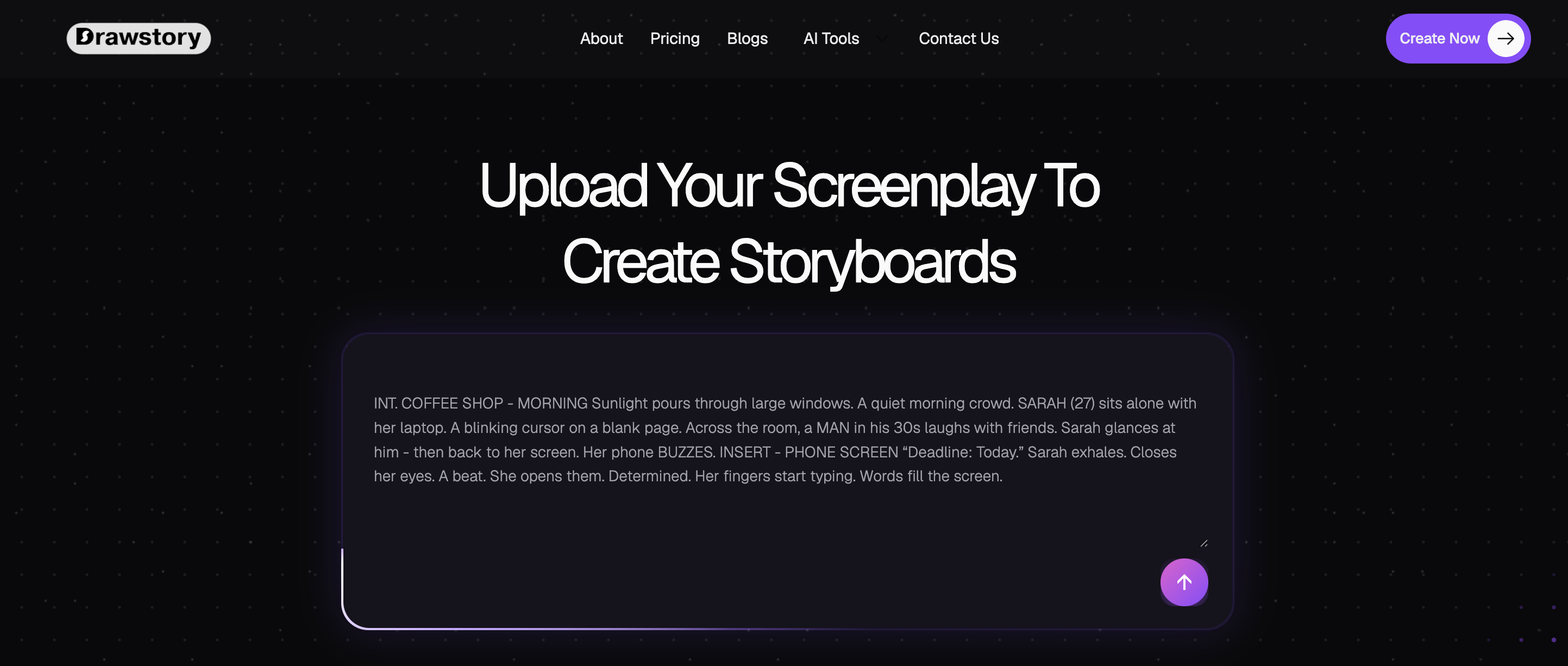
Drawstory is an AI storyboarding platform that helps writers turn their stories into visual storyboards. Instead of creating every panel individually and writing prompts for each image, writers can upload their story and let AI break it down into scenes and shots. This makes Drawstory particularly useful for writers looking for an ai manga storyboard generator from plot or a manga ai storyboard generator plot to panels workflow.
Drawstory also supports character and style consistency, allowing creators to build a more coherent visual storyboard across multiple panels. The main advantage is that the workflow starts with the story rather than individual image prompts. Writers can focus on their narrative while AI helps visualize it.
Pros
- Upload a story instead of writing prompts for every panel
- Generate a storyboard from a complete story
- Character consistency
- Style consistency
- Designed for storytellers and writers
- Useful for creating visual references for illustrators
- Helps visualize a story before final illustration
Cons
- Primarily focused on storyboarding rather than producing final published manga
- AI-generated panels may still need refinement before being used as final artwork
Pricing
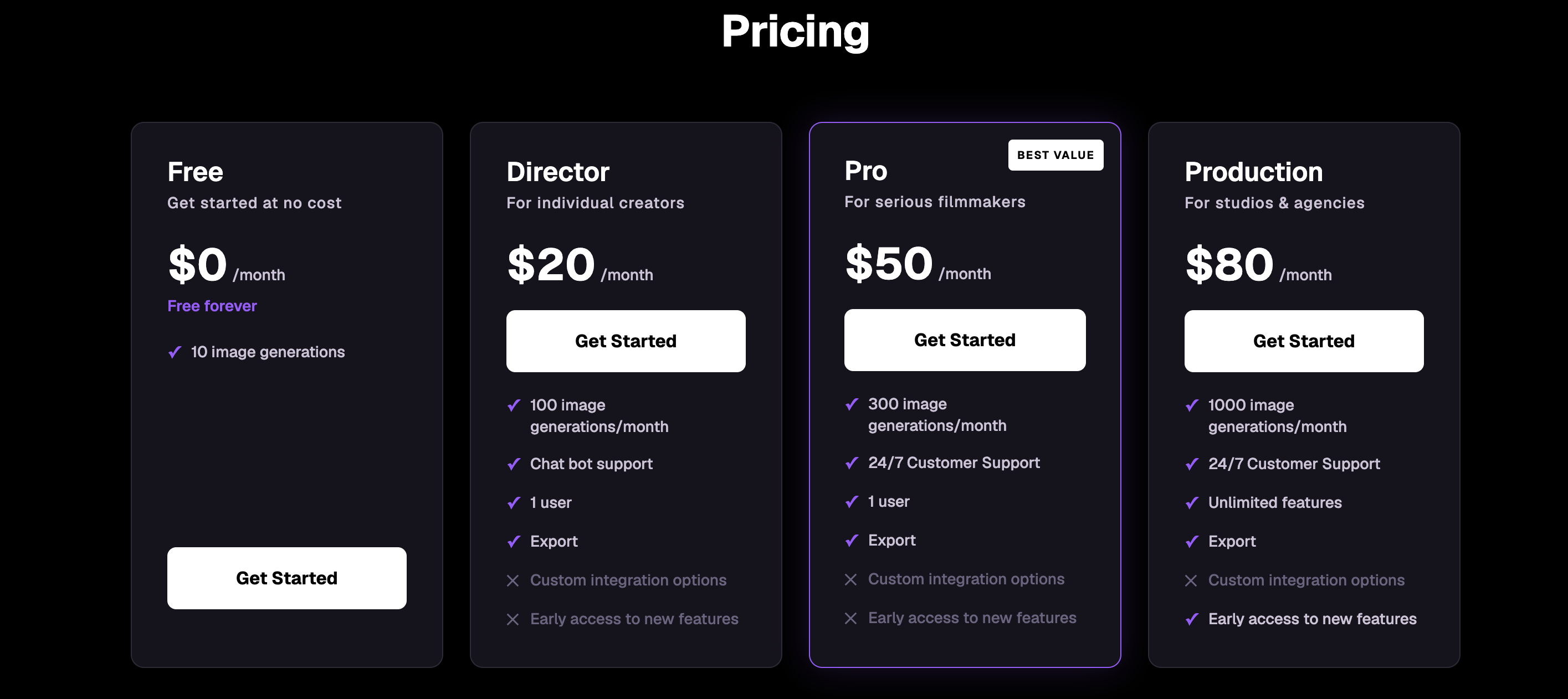
Starting at 20$/month package that includes 100 image generations.
2. Higgsfield
Best for: AI-powered visual creation and experimentation

Higgsfield is an AI platform focused heavily on visual content creation and AI video. It can be useful for creators who want to experiment with characters, scenes, camera movements, and different visual styles. For manga creators, Higgsfield can be useful when experimenting with individual scenes and visual concepts. However, it isn't primarily built around the workflow of uploading a complete story and automatically turning it into a manga storyboard.
That makes it more suitable for visual experimentation than for writers looking for a dedicated story-to-panels workflow.
Pros
- AI-powered visual creation
- Useful for experimenting with different styles
- Strong focus on visual storytelling
- Useful for creating and animating visual concepts
- Can be used for broader AI filmmaking workflows
Cons
- Not specifically designed around manga storyboarding
- A complete story-to-panels workflow may require more manual work
- More focused on visual and video generation than writing-to-storyboard workflows
Pricing
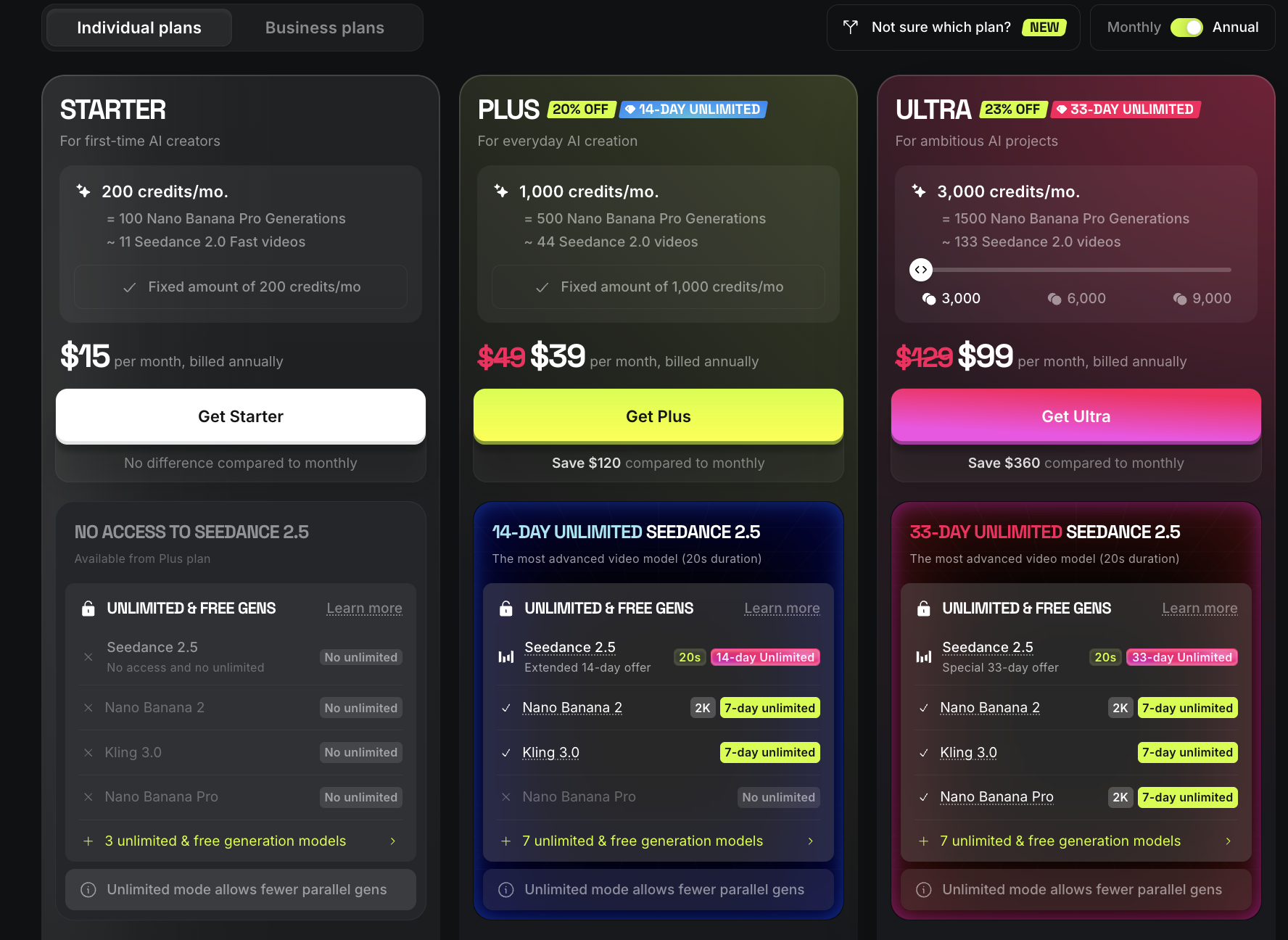
Higgsfield offers paid plans and credits, with pricing subject to change.
3. LlamaGen
Best for: Creating AI comics, manga, and storyboards
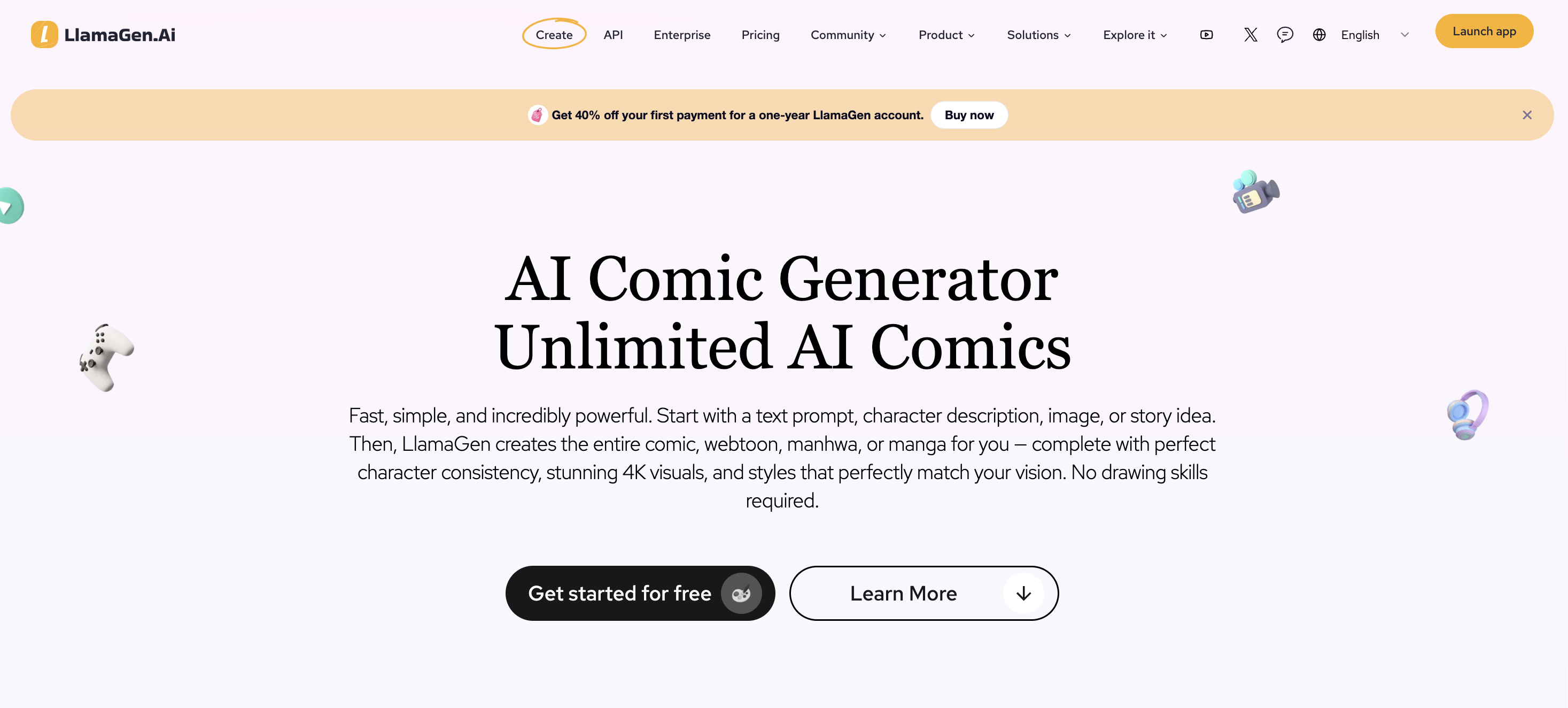
LlamaGen is an AI-powered platform built around comics, manga, anime art, and storyboards. Its features include comic generation, anime art generation, custom comic characters, and storyboard generation. This makes it one of the more relevant options for creators who want to go beyond individual AI images and create structured comic content.
LlamaGen also offers character consistency on higher-tier plans, which is particularly important when creating a manga with recurring characters.
Pros
- Designed specifically for comics and manga
- AI storyboard generation
- Custom comic characters
- Character consistency on higher plans
- Supports multiple panels
- Supports anime-style art generation
- Useful for turning story ideas into visual content
Cons
- Credit-based generation can make costs harder to predict
- Some advanced features require paid plans
- More focused on comic creation than a pure writing-first storyboard workflow
Pricing
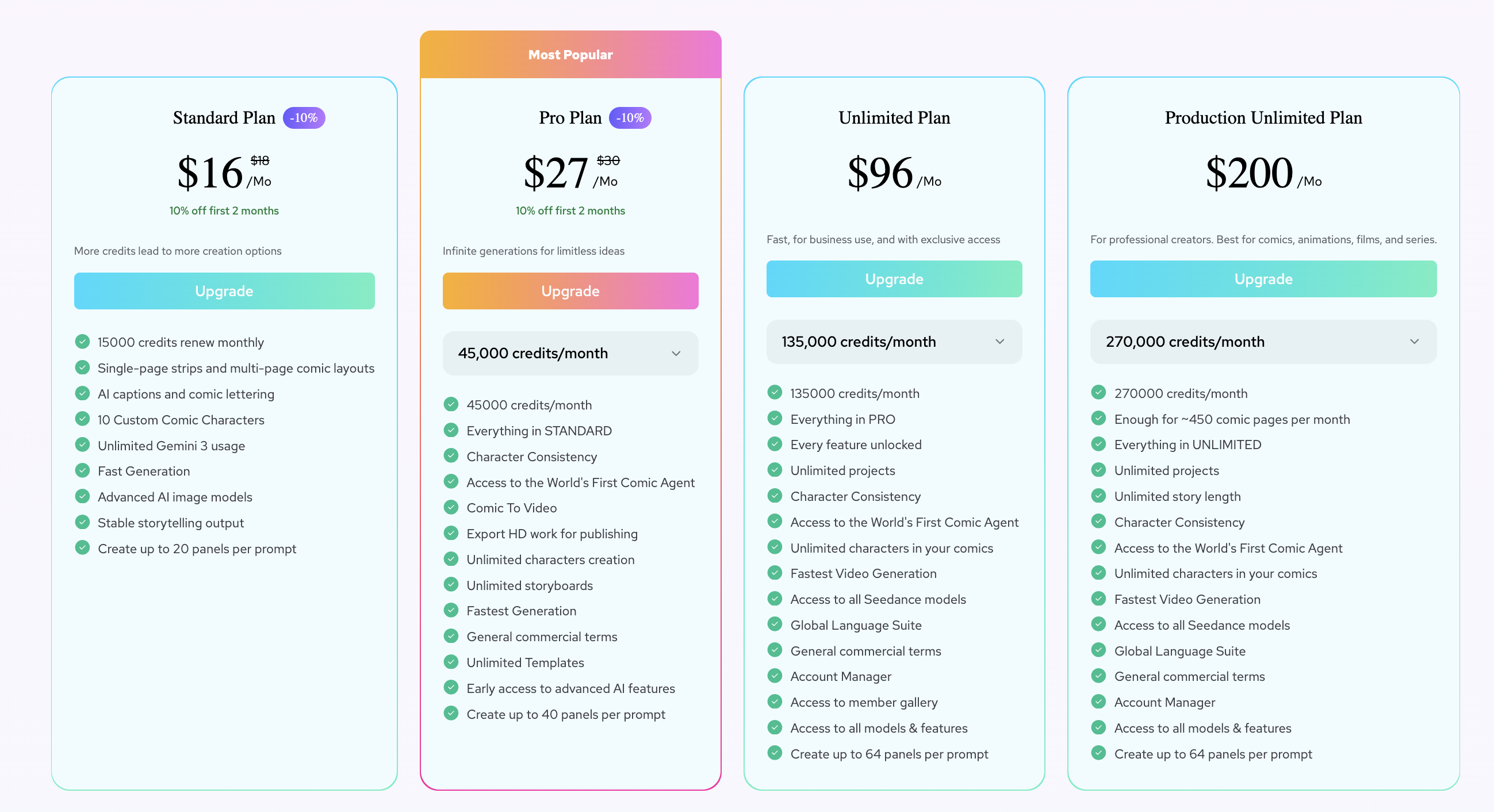
LlamaGen currently has a free option, with paid plans starting around $11/month on one of its pricing pages. Its higher plans include additional credits, character consistency, and more advanced generation capabilities.
4. Midjourney
Best for: High-quality AI-generated manga-style images
Midjourney is one of the most well-known AI image-generation tools. It can create highly detailed manga-style images and is useful for experimenting with characters, environments, compositions, and visual styles. However, Midjourney is primarily an image-generation tool rather than a dedicated manga storyboard generator. Writers typically need to work with individual prompts and generations, which can make creating a complete storyboard more manual.
For someone who simply wants to create a beautiful manga-style image, Midjourney can be a strong option. For someone who already has a complete story and wants to turn it into a sequence of panels, a dedicated storyboard tool may be more convenient.
Pros
- High-quality AI image generation
- Can create manga-style visuals
- Large variety of visual styles
- Useful for experimenting with characters and scenes
- Strong creative control through prompting
Cons
- Requires prompting
- Not specifically designed for turning a complete story into storyboard panels
- Maintaining consistency across a long sequence can require additional work
- More manual than a story-first workflow
Pricing
Midjourney costs $10–$120/month.
5. DaVinci
Best for: Visual creation and editing
DaVinci can be useful for creators working across visual production and editing workflows. Rather than being a dedicated manga storyboard generator, it can be considered as part of a broader visual creation process. For writers specifically looking to turn a plot into manga panels, however, a dedicated manga or storyboard platform may be easier to use.
Pros
- Useful for visual production workflows
- Can complement other creative tools
- Suitable for creators working across different types of visual content
Cons
- Not primarily designed as a manga storyboard generator
- May require additional tools for story-to-panel generation
- Less focused on a writer-first workflow
Pricing
Pricing depends on the specific DaVinci product and plan.
6. Dashtoon
Best for: AI-assisted comic and manga creation
Dashtoon is focused on comic creation and provides a more complete workflow than a general-purpose AI image generator. For manga creators, the advantage is that the platform is designed around creating comics rather than simply generating individual images. It can therefore be useful when the goal is to move from an idea toward actual comic pages and panels.
Pros
- Focused on comic creation
- Suitable for manga and comic-style projects
- More structured than a general AI image generator
- Useful for creating complete comic pages
Cons
- Not necessarily the best option for writers who want a pure story-to-storyboard workflow
- Final comic creation can involve more steps than simply generating a storyboard
Pricing
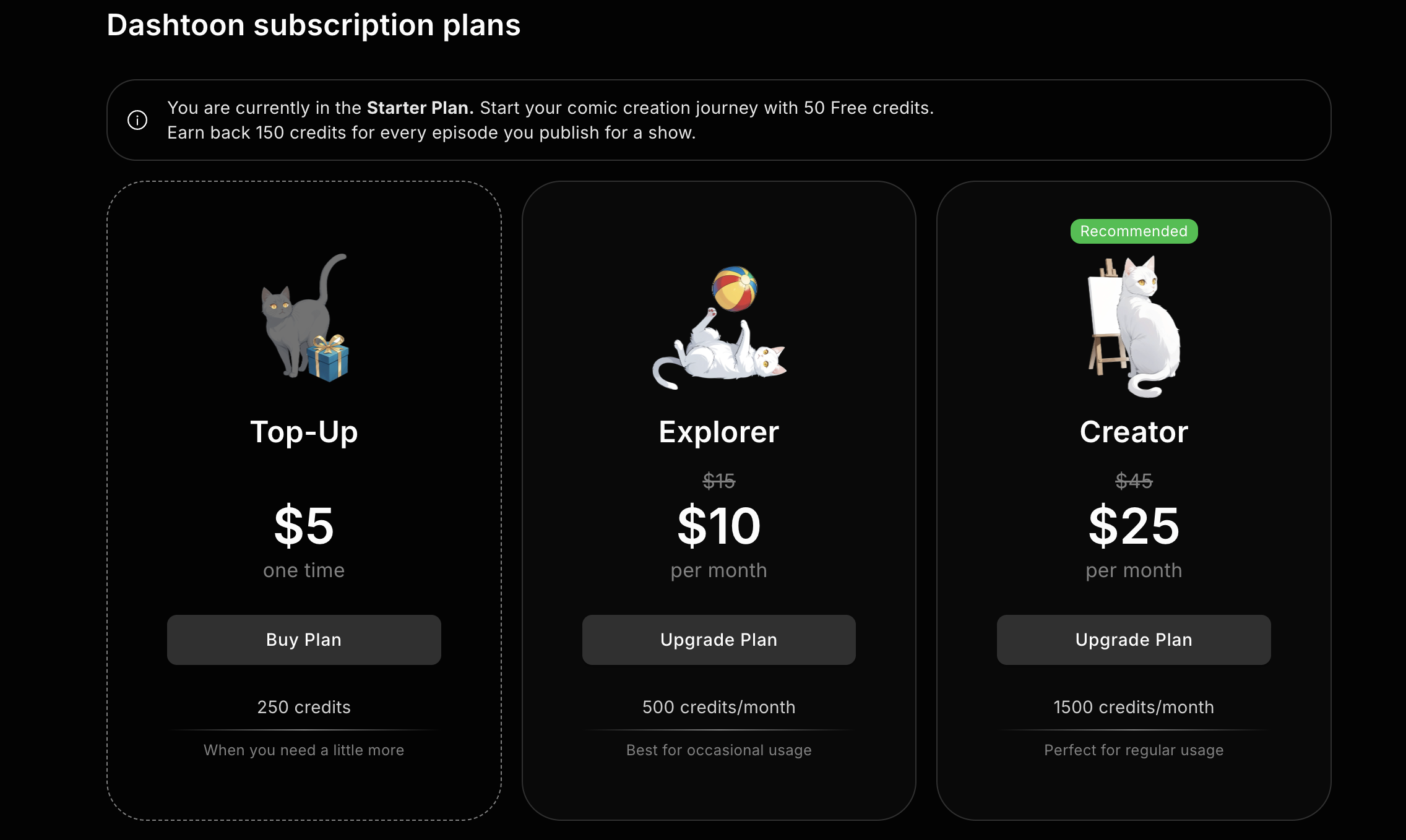
Pricing varies depending on the current plan and usage.
7. Stable Diffusion
Best for: Creators who want maximum control over AI image generation
Stable Diffusion is an open AI image-generation ecosystem that gives creators significant control over how images are generated. For manga creators, it can be useful for creating characters, environments, poses, and different visual styles. The biggest advantage is flexibility. Creators can use different models, workflows, LoRAs, and control tools to build a highly customized image-generation process. However, this flexibility also makes Stable Diffusion more complicated than dedicated manga storyboard tools.
Pros
- Highly customizable
- Large ecosystem of models and workflows
- Can create manga-style artwork
- Strong control over characters and styles
- Useful for advanced creators
Cons
- Requires more technical knowledge
- Requires more manual setup
- Not a dedicated story-to-storyboard tool
- Creating consistent multi-panel stories can require additional workflows
Pricing
The software itself can be used through free and open-source implementations, while hosted services may charge based on usage.
8. ComfyUI
Best for: Advanced creators building custom AI workflows
ComfyUI is a node-based interface for building custom AI image-generation workflows. For manga creators, this can be particularly useful when they want precise control over character references, poses, compositions, styles, and generation models. It is not a plug-and-play manga storyboard generator. Instead, it gives advanced users the ability to build their own workflows.
Pros
- Highly customizable
- Supports complex AI workflows
- Useful for character and style consistency
- Can work with different AI models
- Free and open-source
Cons
- Steep learning curve
- Requires technical knowledge
- Requires significant setup
- Not designed specifically for writers
- Does not provide a simple story-to-panels workflow out of the box
Pricing
ComfyUI is available as free and open-source software, although users may have costs associated with hardware or hosted services.
9. FLUX
Best for: High-quality AI image generation
FLUX is a family of AI image-generation models that can be used to create detailed visual content, including manga and illustration-style images. It can be useful for creators who want to generate individual manga characters, scenes, and visual references. Like Midjourney and Stable Diffusion, however, FLUX is primarily an image-generation technology rather than a dedicated manga storyboard platform.
Pros
- High-quality image generation
- Flexible visual styles
- Useful for character and scene generation
- Can be integrated into different AI workflows
- Useful for experimenting with manga concepts
Cons
- Not a dedicated manga storyboard generator
- Usually requires prompts or an external workflow
- Maintaining story and character consistency can require additional tools
- More suitable for individual image generation than complete storyboarding
Pricing
Pricing depends on where and how you access FLUX, as different platforms offer different plans and usage models.
10. Krita
Best for: Artists who want to create and edit manga manually with AI assistance
Krita is a digital painting and illustration application that can be used to create comics, manga, storyboards, and other forms of visual content. Unlike dedicated AI storyboard generators, Krita is primarily an illustration and editing tool. This makes it a better fit for creators who want hands-on control over their manga rather than an automated story-to-panels workflow.
Pros
- Powerful illustration tools
- Suitable for manga and comic creation
- Useful for editing and refining AI-generated artwork
- Strong manual control
- Free and open-source
Cons
- Requires drawing and editing skills
- Not a dedicated AI manga storyboard generator
- Doesn't automatically turn a complete story into storyboard panels
- More manual than AI-first storyboard platforms
Pricing
Krita is free and open-source.
How to Choose the Best Manga Storyboard Generator
The right manga storyboard generator depends on what you want to accomplish. If you already have a complete story and want to turn it into a sequence of visual panels, look for a tool that supports a story-first workflow. Features such as story upload, automatic scene breakdown, character consistency, and style consistency can save significant time.
If you want to generate individual manga-style images, general AI image generators such as Midjourney or FLUX may be more suitable. If you want to create complete comic pages, platforms such as LlamaGen or Dashtoon may be worth considering.
And if you want maximum control and don't mind a more technical workflow, Stable Diffusion and ComfyUI offer much more flexibility.
What Should You Look for in a Manga Storyboard Generator?
Before choosing a tool, consider these features:
Story-to-panel generation
The most important feature for writers is the ability to go from a story or plot to a sequence of panels. This removes much of the manual work involved in creating each panel separately.
Character consistency
If the same character appears throughout your manga, the AI should be able to maintain their appearance across different panels and scenes.
Style consistency
A storyboard should look like one cohesive project rather than a collection of unrelated AI-generated images.
Panel control
Look for tools that give you control over the number of panels, composition, shot type, and scene structure.
Editing
AI rarely creates the perfect result on the first attempt. Being able to edit or regenerate individual panels is therefore important.
Ease of use
For writers who don't have experience with AI image generation, a simple story-first workflow can be much easier than learning complex prompting or node-based AI systems.
Final Thoughts
AI is making it easier for writers to visualize manga ideas without needing to draw every panel themselves. General-purpose image generators such as Midjourney and FLUX are useful for creating individual images, while more specialized platforms such as LlamaGen and Dashtoon focus on comics and manga.
But if your goal is specifically to take an existing story and turn it into a visual storyboard, Drawstory is the strongest option on this list. Instead of starting with individual image prompts, you can start with your story and use AI to turn it into a sequence of consistent storyboard panels.
For writers looking for an ai manga storyboard generator from plot, this story-first approach can make the process significantly easier.
Frequently Asked Questions
Got Questions?
Find clear answers to common questions about Drawstory, our services, process, and how we bring your ideas to life.
Can I turn my manga plot into a storyboard with AI?


What is the best AI manga storyboard generator from plot?
Can AI keep the same characters consistent across manga panels?
Can I upload my own characters to an AI manga storyboard generator?
Can I turn a full story into manga panels without writing AI prompts?



