Sign Up
Best 20 AI Comic Examples Created in Drawstory.ai
Author:
Narek Ghazaryan
Date:
August 28, 2026
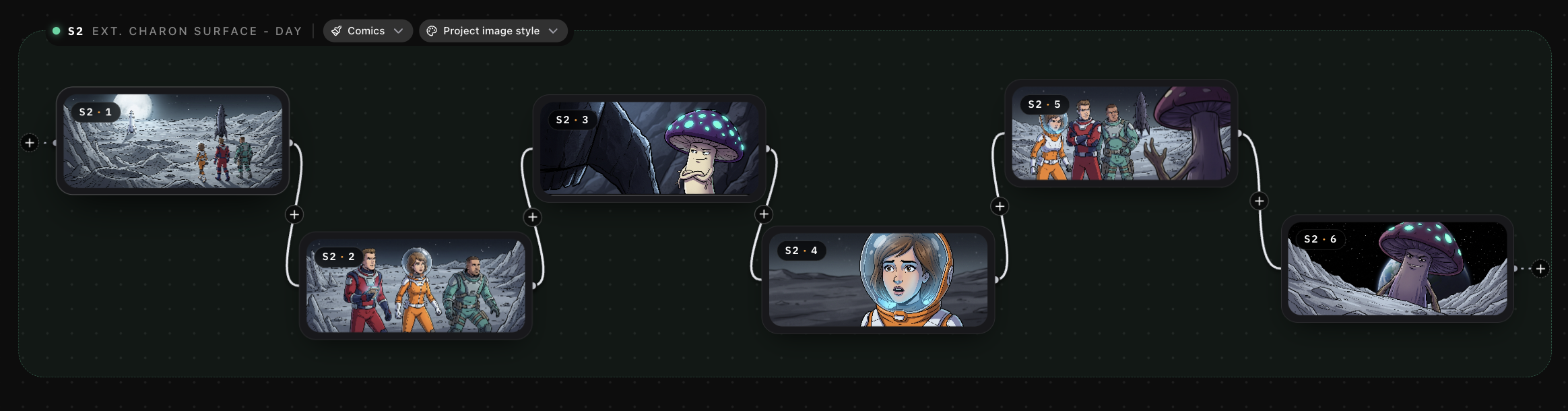
The North American comics and graphic novel market reached USD 2.16 billion, roughly triple where it sat a decade earlier. More people want to make comics than ever. Far fewer can draw one.
These 20 comic examples were all built in DrawStory from a written script rather than a sketchbook. They are grouped by the four visual styles the platform produces, so you can see how the same panel logic reads in sketch, ink, animation, and photoreal treatments.
How to Read This List
Each entry gives you three things. Skim for the style you need, then borrow the technique. Treat them as comic panel examples first and finished art second.
• The premise: What the scene is actually about, because a panel only works if the story beat underneath it works.
• The style: Which of the four DrawStory looks the panels use, grouped by section heading.
• The takeaway: The one composition or pacing choice worth stealing for your own pages.
DrawStory Pricing
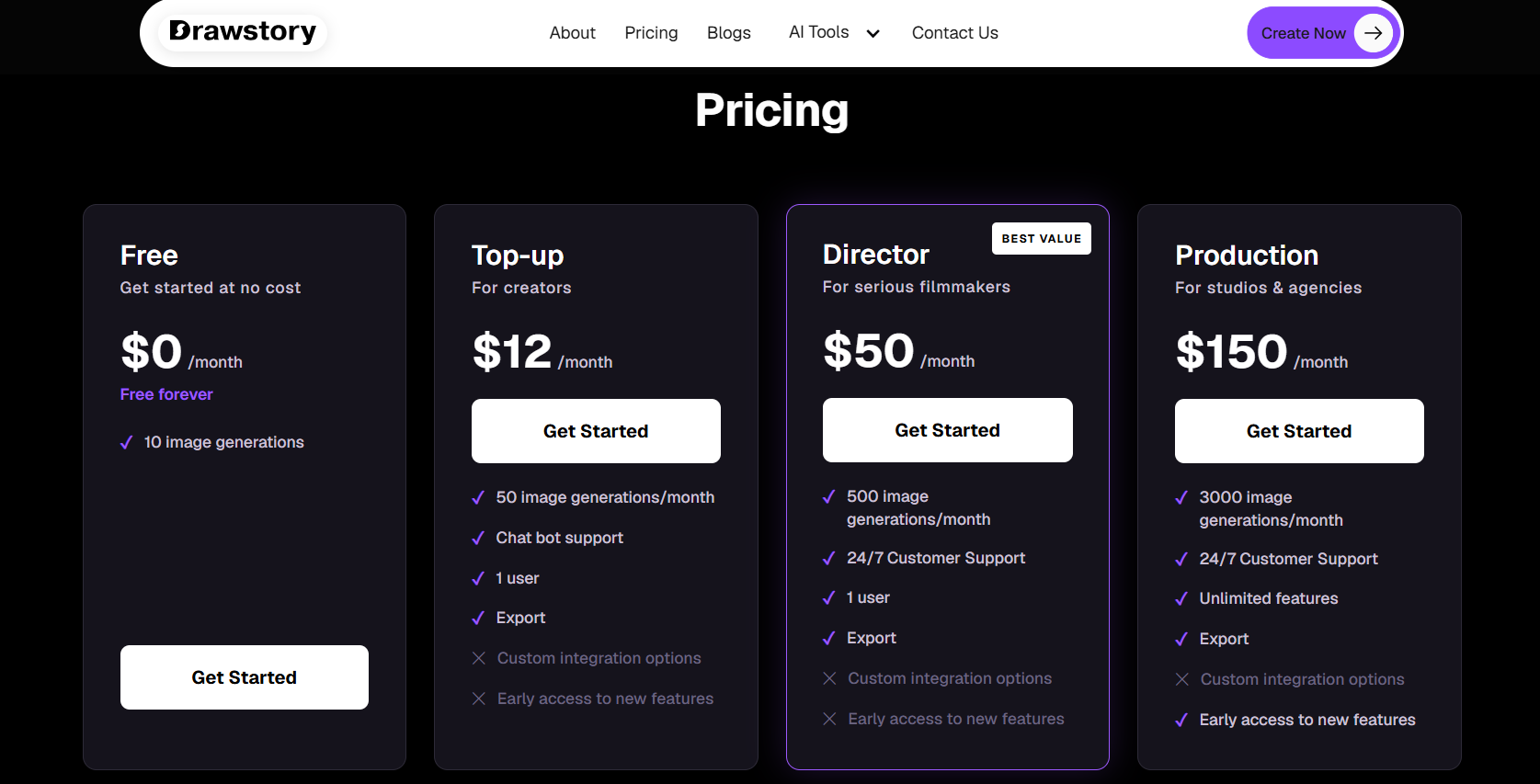
Before the examples, a quick word on cost. Drawstory pricing is built around image generations rather than user seats, which suits comic work where page count drives the bill. The free tier covers 10 generations, roughly one six panel page before revisions, so you can test a scene properly without paying. Paid plans scale from a one-time top-up for a short strip through to studio volume for teams shipping chapters. Most people building comic examples for a portfolio land somewhere in the middle.
Sketch Style Comic Examples
Loose pencil linework. These read like working boards, which makes them useful for pitching before art direction is locked.
1. The Subway Encounter
A woman in a green jacket holds a coffee on a platform as a red train tears past and her expression breaks.
Takeaway: Hold the same character across three panels and let only the face change. Continuity does the emotional work.
2. The Heist Briefing
Five figures around a table, overhead map lit from below, one hand pointing at the target.
Takeaway: A single high-angle establishing panel can replace a page of dialogue explaining who is in the room.
3. Morning Routine in Six Panels
Alarm, kettle, mirror, keys, door, empty street. No dialogue anywhere.
Takeaway: Six panel comic strip examples work best when each frame is one action and the gaps carry the rhythm.
4. The Kitchen Argument
Two people at opposite counter ends, the space between them widening panel by panel.
Takeaway: Move the camera back as tension rises. Physical distance reads as emotional distance.
5. Chase Through the Market
Stalls, fabric, scattering crowds, and a runner cutting diagonally through every frame.
Takeaway: Keep the subject on the same diagonal across panels so the eye tracks motion without a caption.
Comic Book Style Examples
Inked linework and bold shadow. These are the closest to traditional graphic novel pages, and the comic book examples most readers picture first.
6. The Rooftop Landing
A caped figure drops into frame, concrete cracking outward, city lights blown out behind.
Takeaway: Break the panel border with one limb. It makes a static image feel like it is still moving.
7. Noir Interrogation
Single overhead bulb, deep shadow, two faces split by hard light across a metal table.
Takeaway: Light one side of every face. Contrast alone can carry a genre before a word is read.
8. Bridge of the Kepler
Crew at consoles, viewport filling the top third, alert wash tinting the whole page.
Takeaway: Colour the entire panel with one hue to signal a state change instantly.
9. The Standoff
Two gunfighters, empty street, three tightening panels ending on a single eye.
Takeaway: Cut progressively closer on the same subject. The rhythm builds dread without new information.
10. Down to the Basement
A torch beam narrowing down wooden steps into black, panels shrinking as they descend. Takeaway: Shrink panel width as the character descends. Layout itself can produce claustrophobia.
Animation Style Examples
Cleaner shapes and flatter colour. This style suits webtoon scrolls, younger audiences, and anything heading toward animatics or video.
11. Rooftop Confession
Two students, chain-link fence, late sun, one line of dialogue held across four beats.
Takeaway: Give a single sentence four panels. Silence around dialogue is what makes it land.
12. The Treasure Map
Three kids, a torn map, a garden that gradually reads as a jungle.
Takeaway: Let the background drift from real to imagined while characters stay consistent.
13. Corner Table, Tuesday
A cafe regular, the same seat, four panels across four seasons.
Takeaway: Repeat the exact framing and change only the world around it to show time passing.
14. The Dragon Reveal
A climb up scree, then a full-width panel where the mountain opens one eye.
Takeaway: Spend three small panels to earn one wide one. Reveals need setup to pay.
15. Match Point
A serve frozen mid-air, the crowd rendered as motion streaks, the ball dead centre.
Takeaway: Blur everything except the subject. Focus is a storytelling tool, not just a camera setting.
Realistic Style Examples
Photoreal rendering with cinematic lighting. These double as pitch frames and sit close to storyboard examples used on real productions.
16. The Letter, 1918
A woman at a window reading, dust in the light, the envelope shaking slightly.
Takeaway: Period detail belongs in the props and the light, not in exposition boxes.
17. On the Record
A subject centre frame against a soft backdrop, eyeline just off camera.
Takeaway: Documentary framing signals honesty. Break the eyeline only when the subject lies.
18. Thirty Seconds of Coffee
Beans, grinder, pour, first sip, logo. A full commercial beat in five frames.
Takeaway: Ad boards need the product visible in the final two panels. Structure the tension before it.
19. Corridor at 4 A.M.
A surgeon walking away from the camera, doors receding, fluorescent light flattening everything.
Takeaway: A character walking away carries more weight than the same character facing us.
20. The Toast
A raised glass, the room soft behind, one face in the crowd not smiling.
Takeaway: Plant one wrong detail in a warm panel. Readers notice before they can say why.
What the Strongest Comic Examples Have in Common
Looking across all 20, the same four decisions keep showing up.
• Character consistency beats rendering quality: A rough sketch with the same face throughout reads better than a polished page where the character shifts. Locking identity with a character sheet is the highest-leverage step.
• Panel size is punctuation: Wide panels slow the reader down. Narrow ones speed them up. Most weak pages use one size throughout.
• The gap does the work: What happens between panels is where readers do the imagining. Show less than you think you need to.
• Composition carries genre: Lighting and angle announce noir, romance, or horror before any dialogue. This guide to shot composition covers the specific setups.
How to Create Pages Like These
Every page above came out of the same three-step loop in the AI comic maker.
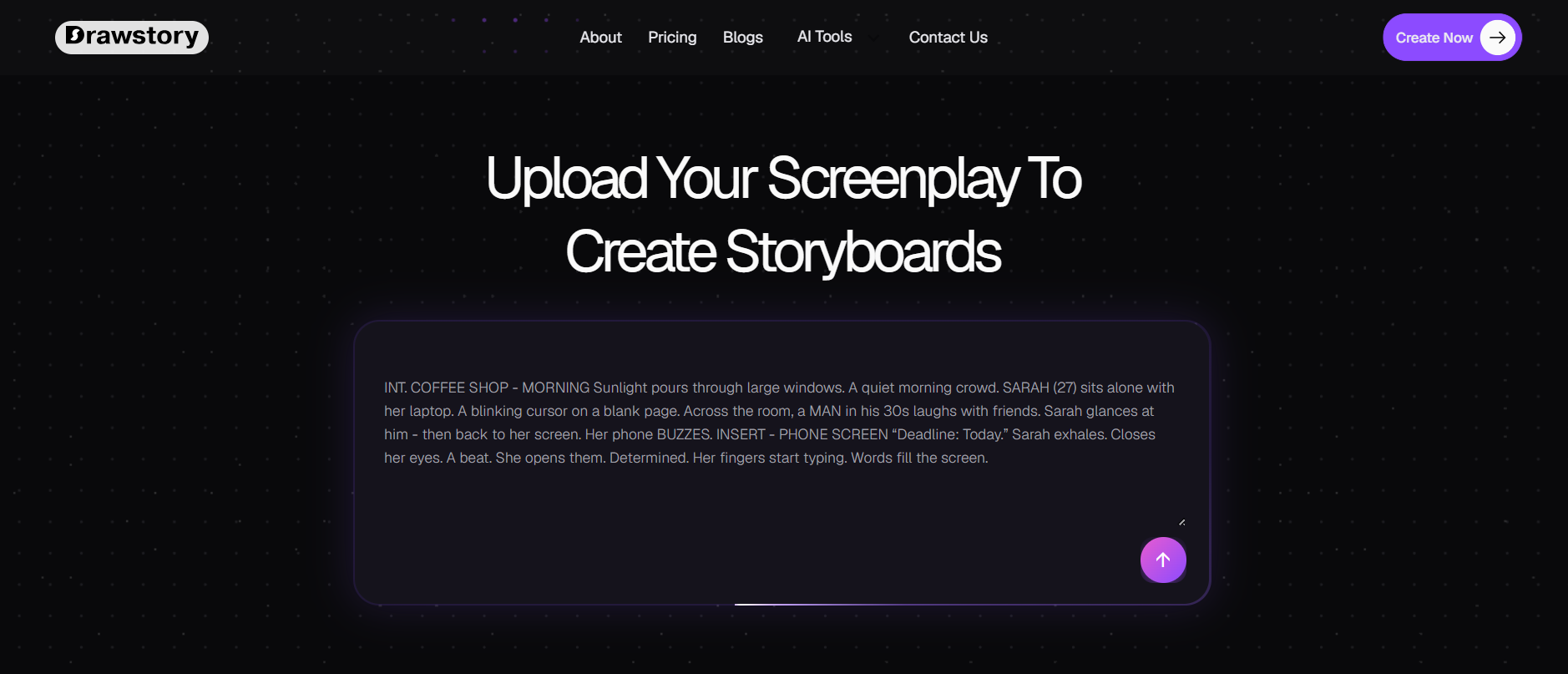
• Upload your story: Paste an idea, a scene description, or a full script. PDFs and text files both work.
• Generate the panels: The system breaks your text into panels and keeps characters and backgrounds consistent across them. This is the core of how you convert a story into a comic.
• Edit and export: Swap characters, remove objects, regenerate any panel, then export as a PDF or an image series.
Frequently Asked Questions
What is an example of a comic?
A comic is a sequence of images that tells a story, usually with speech bubbles or captions. Newspaper strips like a four-panel gag, superhero issues, manga volumes, and vertical webtoons all count. The comic examples above show the same idea across four different art styles, from rough sketch through to photoreal.
Can AI create a full comic book?
Yes. DrawStory turns a script into comic pages with consistent characters, expressions, and backgrounds, then exports the finished result as a PDF or image series. You stay in control of edits, so you can regenerate a single panel without rebuilding the page around it.
Can I make comic examples in different art styles?
You can. The four groups above are the styles available: sketch, comic, animation, and realistic. Manga and stylised looks are supported alongside photoreal rendering, so the same script can be tested in several treatments before you commit to one.
Do I need to be able to draw?
No. Every example here started as written text. If you can describe a scene, the AI storyboarding engine handles the illustration. It reads your script the way a storyboard artist would, identifying shots, characters, and camera angles for you.
Turn Your Script Into Comic Pages
Reading comic examples only gets you so far. The faster way to learn what works is to run your own scene through and see it come back as panels. Drawstory is free to start with 10 image generations, no card needed. Upload a script and make your first page today.
Frequently Asked Questions
Got Questions?
Find clear answers to common questions about Drawstory, our services, process, and how we bring your ideas to life.
What is AI comic?


Can AI create a full comic book?
Can I make comic in different art styles?
Do I need to be able to draw?
Can I create a comic from a story I wrote?



