Sign Up
Brand Book Maker: Create Professional Brand Guidelines with AI
Author:
Narek Ghazaryan
Date:
April 27, 2026
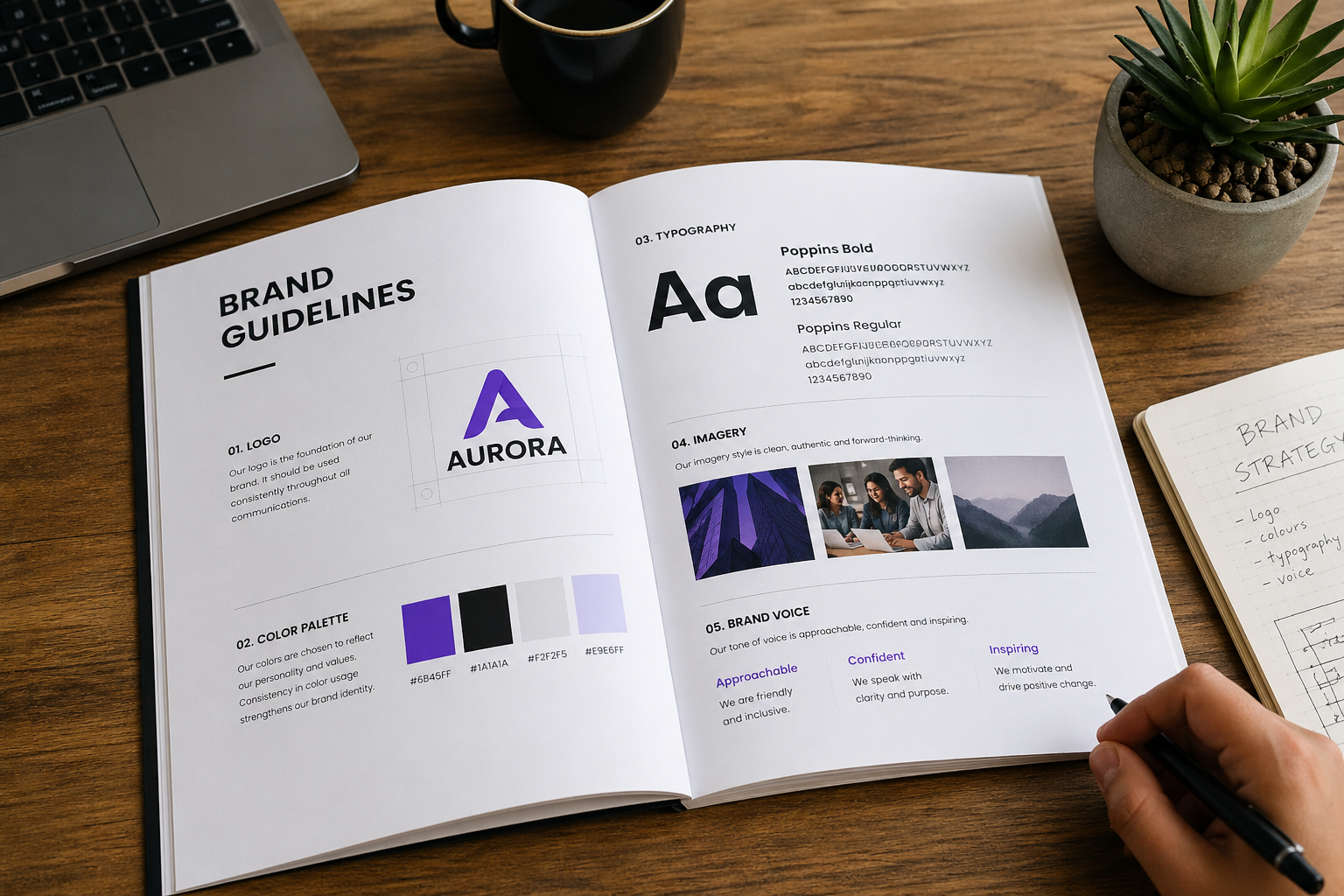
Every company needs a brand book. Few actually build one. A brand book maker powered by AI turns that gap into a solved problem. You upload your logo, pick your colors, define your voice. The tool generates a structured document with usage rules, visual examples, and formatted guidelines. What used to cost thousands and take weeks now takes hours.
This guide walks through the full workflow for creating a professional brand book with AI. Five steps take you from scattered assets to a finished visual brand book.
What a Brand Book Contains
A brand book is the single source of truth for how a brand looks, sounds, and feels. Any brand book maker starts with the same core sections. Logo usage, color palette, typography, imagery, and brand voice. These elements hold every rule that keeps visuals consistent across teams and campaigns.
Logo guidelines define clear space, minimum sizes, and incorrect usage examples. The color section lists primary, secondary, and accent colors with exact hex and RGB values. Typography rules set the hierarchy for headings, body text, and captions. Imagery direction specifies photography style, illustration approach, and icon standards. Brand voice guidelines describe tone attributes and writing rules.
A strong creative brief pulls from this same foundation. The brand book feeds every visual decision a team makes.
Why AI Changes Brand Book Creation
Traditional brand books require agencies. A branding agency charges $5,000 to $50,000 for a complete brand guidelines package. The timeline runs 4 to 12 weeks. Most startups and small businesses skip the process entirely. An AI brand book maker removes that barrier.
AI brand book tools changed the math. A brand book ai tool generates formatted guideline pages from your inputs in hours. Cost drops to under $100. The global branding agencies market reached $59.89 billion in 2026 with a 6.2% CAGR (source: Grand View Research). That growth reflects how many businesses invest in brand identity. AI filmmaking tools follow the same pattern of making professional workflows accessible at lower cost.
Step 1: Gather Your Brand Assets
Start by collecting everything that already exists. Pull together logo files in multiple formats. SVG for web, PNG for documents, EPS for print. Document every color your brand currently uses. List fonts from your website, social media, and marketing materials.
Compile photography samples that represent your visual direction. Gather any existing guidelines, even informal ones. A Google Doc with "use this blue" counts. The goal is a complete inventory. A brand book maker works best with clear inputs. Missing assets create gaps in the output. Spend time here to save time later.
Step 2: Define Your Visual Identity Elements
With assets gathered, define the rules for each element. This is where a brand book maker needs the most detail. This step turns raw files into structured brand standards.
Logo usage needs specific rules. Set minimum clear space around the logo. Define the smallest acceptable size for print and digital. List background colors where the logo works and where it does not. Create versions for light and dark backgrounds.
Build a complete color system. Primary colors carry the brand. Secondary colors support layouts. Accent colors highlight actions and calls to attention. Neutral tones handle text and backgrounds. Record hex, RGB, and CMYK values for every color.
Set a typography scale with clear hierarchy. Heading fonts, body fonts, and caption styles each need defined sizes and weights. Text to storyboard workflows rely on this same visual hierarchy principle. Consistent type rules make every piece of content feel like it belongs to the same brand.
Step 3: Generate Brand Guidelines with AI
Feed your defined elements into a brand book maker tool. The AI takes structured inputs and produces formatted guideline pages. Upload your logo. Input your color values. Select your fonts. Describe your imagery direction.
The tool generates usage rule pages automatically. It creates do and don't examples for logo placement. It builds color swatch pages with labeled values. Typography samples show the hierarchy in action. Some tools also generate mockups showing guidelines applied to business cards, social posts, and presentations.
Brand consistency increases revenue by 20 to 23 percent (source: Lucidpress). A creative brief to storyboard workflow applies similar visual consistency logic. The brand book maker automates the formatting. You control the creative decisions.
Step 4: Add Brand Voice and Messaging
Visual guidelines cover how the brand looks. Voice guidelines cover how it sounds. Both belong in the same document.
Define three to five tone attributes. A brand might be professional, warm, and direct. Or bold, playful, and minimal. List writing dos and don'ts for each attribute. Include sample copy for common formats. Show what an on-brand email subject line looks like. Show an on-brand social media caption. Show an on-brand website headline.
Place the tagline and mission statement in this section. Teams reference these when creating any new content. A brand book without voice guidelines only solves half the consistency problem. The best brand book maker tools include voice templates alongside visual ones.
Step 5: Assemble and Export the Final Book
Review every section for accuracy and consistency. Check that color values match across all pages. Verify logo files display correctly. Confirm typography samples use the right fonts and sizes.
Most brand book maker tools export as PDF for easy sharing. Create a living document version that teams can update as the brand evolves. Distribute the final file to every person who creates brand content. Designers, marketers, agencies, and freelancers all need access. Companies that enforce brand consistency report 10 to 20 percent revenue growth from that discipline alone (source: Lucidpress). A visual brand book only works if people actually use it. Professional storyboard examples follow the same principle of shared visual references across teams.
What to Look for in a Brand Book Maker
Not every brand book maker handles the full scope of brand guidelines. A basic template fills in colors and fonts. A real brand book maker platform generates usage rules, mockups, and formatted pages.
Look for template variety. Startups need clean and minimal layouts. Corporate brands need structured and formal designs. Creative agencies need flexible and expressive formats. Color palette generation from a logo upload saves time. Typography pairing suggestions prevent font conflicts. The best AI storyboarding tools share this same principle of combining AI suggestions with user control.
Export options matter. PDF works for static distribution. Web-based versions allow real-time updates. Interactive formats let teams search for specific guidelines. Collaboration features also count. Brand books need review cycles before final distribution.
AI Brand Book vs Agency Brand Book
AI tools handle speed and affordability. Agencies handle complex multi-brand architecture and deep strategic positioning. For most businesses, an AI brand book maker covers 80 percent of what a brand book needs. Save the agency budget for brand strategy. Use AI for the document itself.
Consumers notice the result either way. 86 percent of consumers say brand authenticity matters when choosing where to spend (source: Stackla). A professional brand style guide ai tool produces a polished document that signals credibility. The production method matters less than the outcome.
Common Brand Book Mistakes to Avoid
Vague guidelines fail first. "Use our blue" without a hex code leads to five different blues across a website. Every color, font, and spacing rule needs exact values. No room for interpretation.
Rigid guidelines fail second. A brand book that only shows logo placement on white backgrounds breaks when a designer needs a dark background. Include rules for multiple contexts. Show flexibility within boundaries.
Missing examples weaken every section. Rules without visual do and don't comparisons leave teams guessing. Film composition relies on the same visual comparison approach. Show the correct version. Show the incorrect version. The contrast teaches faster than text alone.
The biggest mistake is creating a brand book and never updating it. A good brand book maker supports ongoing revisions. Brands evolve. The book should evolve with them. Set a quarterly review cycle.
Build Your Brand Book Today
Your brand assets already exist. The structured guidelines are one workflow away. Gather your files. Define the rules. Let AI format the pages. A brand book maker turns scattered logos and color codes into a professional document your entire team can follow. DrawStory brings this same visual consistency to every creative project. AI storyboarding built for teams that value consistent visual storytelling at any scale.
Frequently Asked Questions
Got Questions?
Find clear answers to common questions about Drawstory, our services, process, and how we bring your ideas to life.
What is a brand book maker?


How does an AI brand book maker work?
Can I create a professional brand book without a designer?
What should be included in a brand book?
How long does it take to create a brand book with AI?



